Horse, Western Sublimation Review
As a designer who spends more time than I care to admit staring at stitch density charts and debating thread colorways, I approach every new asset with a mix of skepticism and hope. When Horse, Western Sublimation landed in my inbox, I didn’t just see a graphic; I saw potential inventory for my small shop and a challenge for my digitizing workflow. The product is listed under Print Templates and categorized as Graphics, but let’s be clear: this is about how it translates from a screen to the hoop.
The premise is straightforward. You receive a PNG file with a transparent background, rendered at 300dpi. It is sent as a finished file, not an editable vector like an SVG. For many embroidery designers, this distinction is critical. If you are looking to manipulate individual nodes or resize infinitely without quality loss, this isn’t your tool. But if you are looking for a high-resolution raster image to use as a sublimation transfer or a print template that will then be embroidered over or integrated into a design workflow, this file format serves a very specific, practical purpose.
First Impressions and Visual Personality
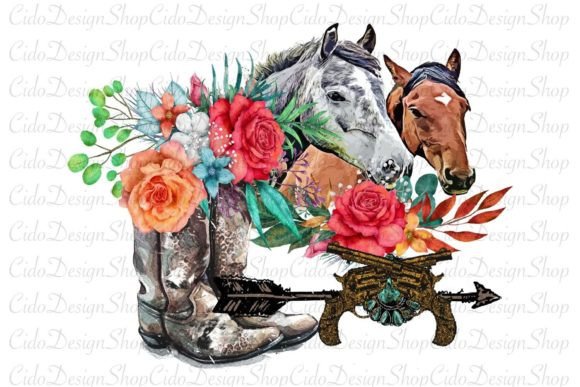
The mood of Horse, Western Sublimation is immediate and distinct. It doesn’t try to be subtle. The visual personality leans heavily into rustic charm, evoking the feeling of a dusty trail at sunset or a well-worn leather saddle. For designers working in the niche of western wear, rural aesthetics, or equestrian-themed gifts, this imagery hits the right emotional notes instantly.
From a layout perspective, the composition feels balanced enough to sit comfortably on a chest pocket of a denim jacket or centered on the back of a sweatshirt. The detail level is high, which is both its greatest strength and its most significant risk factor in embroidery. The shapes are bold, but there are intricate elements that require careful consideration when translating them into thread. It feels like a design meant to tell a story rather than just fill space, which is exactly what buyers look for in handmade products today.
Real-World Application: The Custom Tote Bag Scenario
To understand how this design truly performs, I put it through a mental simulation based on recent client requests. Imagine a boutique owner in Austin ordering custom tote bags for a local farmers market. They want something that screams "local craft" without being cliché. Horse, Western Sublimation fits this bill perfectly.
Here is how I envision the production process: The design would likely be used as a base for a sublimated panel sewn onto a canvas tote, or perhaps printed directly onto a fabric insert before topstitching. Because the PNG has a transparent background, layering becomes effortless. You can place the horse graphic over a textured fabric background or integrate it with other elements like floral borders or text overlays. This flexibility is huge for digital product sellers and Etsy sellers who create mockups. Being able to drop this high-res graphic into a smart object layer allows for realistic previews of how the final embroidery project might look, even if the final product involves printing rather than pure stitching.
However, if we are talking about direct machine embroidery, the application changes. A sweatshirt embroidery project using this design would benefit from a large hoop size. The western theme pairs beautifully with heavy cotton blends or fleece, fabrics that provide stability and contrast. The result is a handmade product that feels premium and substantial, elevating a simple garment into a statement piece suitable for personalized gifts.
Where to Use Caution
No design is perfect for every surface, and Horse, Western Sublimation is no exception. As an experienced reviewer, I must highlight where this graphic might struggle. The primary concern lies in scale and fabric texture.
- Small Hoop Sizes: Attempting to stitch this design in a 4x4 hoop is risky. The details may become muddy, losing the sharp definition that makes the image appealing. If the original PNG is complex, reducing it too much results in a blob of color rather than a recognizable figure.
- Textured and Stretchy Fabrics: While great for sturdy canvas or denim, this design could distort on thin, stretchy materials like lightweight jersey or loose-knit sweaters. Without proper stabilization, the tension required to hold the shape might pucker the fabric, ruining the finished product.
- Dense Stitch Areas: If you are converting this PNG into an actual machine embroidery design (digitizing it), you need to be mindful of the stitch density. A western horse motif often includes mane and tail details that can lead to excessive thread usage. Too much density creates a stiff, cardboard-like feel, which detracts from the comfort of apparel items.
- Curved Surfaces: Applying this to caps or hats requires precision. The flat nature of the PNG works best on flat surfaces like aprons, pillow covers, or tea towels. On curved surfaces, the perspective might look distorted unless the design is specifically adapted for curvature.
Impact on Brand and Customer Trust
In the world of craft business and online retail, presentation is everything. Using a high-quality asset like Horse, Western Sublimation signals professionalism. Customers can often tell the difference between a pixelated, low-effort design and one that has been carefully selected and prepared. A crisp, 300dpi PNG ensures that your digital mockups look accurate, setting the right expectations for the buyer.
Furthermore, the thematic consistency of this design helps build brand identity. If your shop specializes in western or rustic decor, having a cohesive library of graphics like this allows for consistent branding across multiple products—whether it’s a tote bag design, a nursery decor item, or a holiday gift tag. This consistency fosters customer trust and encourages repeat purchases because the aesthetic feels reliable and curated.
Practical Designer Notes for Implementation
Before committing this design to a full production run, I recommend following these practical steps to ensure success:
- Test on Scrap Fabric: Always test your layout on a scrap piece of the intended fabric first. Check how the colors interact with the material’s texture.
- Check Thread Color Contrast: If you are digitizing this into an applique design or using satin stitch and fill stitch techniques, ensure there is enough contrast between the thread and the background fabric. Dark threads on dark fabric will disappear; light threads on light fabric may lack definition.
- Review Stitch Density: If you are creating the embroidery file yourself, inspect the small details. Are they too fine? Can they be simplified without losing the essence of the horse?
- Confirm Hoop Size: Verify that your machine’s maximum hoop size accommodates the design dimensions. Don’t get caught mid-project realizing the design is too wide.
- Use Proper Stabilizer: The choice of stabilizer is crucial. A cut-away stabilizer is often best for garments that will be worn frequently, while a tear-away might suffice for一次性 items like party favors.
- Licensing Check: Since this is sold as a graphic file, double-check the commercial license terms. Ensure you are permitted to sell finished products made with this design, especially if you are operating as an Etsy seller or running a small shop product line.
Final Verdict
Horse, Western Sublimation is a versatile, high-impact graphic that brings a strong western aesthetic to any project. It shines in applications where clarity and visual appeal are paramount, such as sublimated apparel, print templates for mockups, and stable fabric projects like totes and aprons. While it requires careful handling regarding scale and fabric choice to avoid distortion, its potential to elevate a custom apparel item or create a memorable personalized gift is undeniable.
For designers seeking to add a touch of rustic elegance to their design assets, this file is a solid addition. Just remember: the quality of the final output depends as much on your preparation and execution as it does on the quality of the source file. Test thoroughly, stabilize properly, and let the design do the talking.