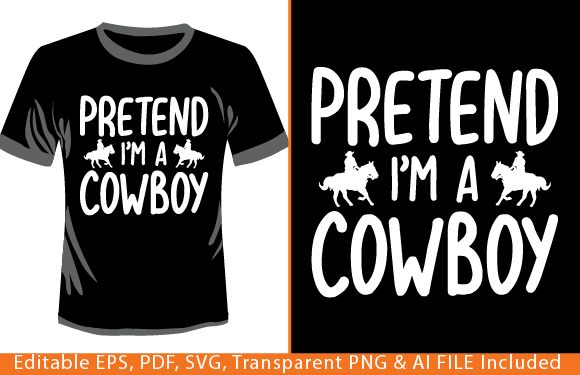
Halloween Pretend I’m a Cowboy T-shirt
As an embroidery designer who spends half my life staring at stitch files and the other half troubleshooting tension issues on vintage denim, I don’t just look at a design; I look at how it will behave under the needle. When evaluating a new asset for my library or for client work, I need to know if it translates well from screen to fabric. Today, I am breaking down the Halloween Pretend I’m a Cowboy T-shirt graphic. This isn’t just about whether it looks cute on a JPEG; it is about whether it holds up as a viable machine embroidery design for real-world production.
The premise of this piece is straightforward: a playful crossover of two distinct themes—Halloween and Western wear. For Etsy sellers, small shop product creators, and craft business owners, niche intersections like this are gold mines. However, execution is everything. A clever concept can fail miserably if the stitch density is too high for the fabric or if the details get lost in the thread count. Here is my practical assessment of using this embroidery project in your next batch of handmade products.
First Impressions and Visual Personality
The immediate mood of the Halloween Pretend I’m a Cowboy T-shirt graphic is whimsical and approachable. It avoids the overly spooky or aggressive aesthetics that often dominate the Halloween category, making it far more versatile for a broader audience. The visual personality suggests a character who is ready for trick-or-treating but wants to stand out with a bit of rustic flair. From a design standpoint, this clarity is crucial. When customers browse through printable mockups or physical displays at a craft fair, they need to understand the joke instantly. This design delivers that immediately.
The layout appears balanced, which is the first thing I check when importing a file into my hoop. A cluttered composition often leads to tangled threads or missed stitches during automated runs. This design feels spacious enough to allow for proper satin stitch definition around lettering or key graphical elements, while leaving room for fill stitch areas to create texture without becoming heavy. It has the kind of clean visual hierarchy that translates well to various custom apparel items, ensuring the message remains legible even after washing.
Real-World Application: Where This Design Shines
In my experience, the best embroidery designs are those that feel native to multiple products. The Halloween Pretend I’m a Cowboy T-shirt concept is incredibly adaptable. While the title specifies a t-shirt, limiting its potential would be a mistake. I see this design performing exceptionally well on heavier fabrics where structure supports the weight of the embroidery.
Consider a sweatshirt embroidery application. A crewneck sweatshirt provides a sturdy canvas that can handle the stitch density required for a detailed cowboy hat or boot motif without pilling or distorting. For holiday embroidery collections, this item fits perfectly into a "spooky season" drop alongside pumpkins and ghosts, offering variety for buyers who want something different. It also works beautifully as a personalized gift. Imagine customizing the text or adding a name above the graphic for a child’s first Halloween costume or a themed party favor.
Furthermore, this design is ideal for tote bag design projects. A canvas tote allows the graphic to breathe, and the rugged nature of the material complements the western theme. It creates a cohesive aesthetic that appeals to parents shopping for back-to-school supplies or seasonal gifts. For baby embroidery, such as onesies or bibs, the softer color palette typically associated with this type of graphic ensures it doesn’t overwhelm the small garment. It strikes a balance between festive and everyday wearability, which increases the perceived value of the finished product.
Areas Requiring Careful Consideration
No design is perfect for every surface, and being honest about limitations protects your reputation as a maker. There are specific scenarios where you should exercise caution with this graphics template.
First, avoid placing this on highly textured or stretchy fabrics unless you have extensive experience with stabilizers. Materials like waffle-knit sweaters or thin jersey knits can distort the shape of the design, causing the running stitch lines to wave or buckle. Always use a cut-away stabilizer for these types of garments to maintain integrity. Similarly, applying this to curved surfaces like baseball caps requires precise digitizing adjustments. If the original file was created for a flat placket, it may not lay flat on a curved brim without manual intervention.
Another critical factor is scale. Do not attempt to downscale this design significantly for tiny applications like embroidered patch accents on a backpack strap or a small pocket square. Small details, particularly any text involved in the "Pretend I’m a Cowboy" phrase, may become illegible or merge together. Stick to medium to large hoop size placements to preserve the artistic intent. Additionally, on dark fabrics, ensure you have a solid underlay plan. Without proper stabilization underneath, the top threads may sink into the fabric, reducing contrast and giving the piece a cheap appearance.
Technical Notes for Embroidery Designers
Before committing to a full production run, follow these practical steps to ensure quality control:
- Test on Scrap Fabric: Never trust a digital preview entirely. Stitch the design on the exact fabric type you plan to sell. Check how the thread interacts with the weave.
- Check Thread Contrast: Evaluate your thread colors against the background. Light threads on dark fabric require a higher stitch count to cover fully, which can increase run time and thread usage.
- Review Density: Look closely at the fill stitch areas. Are they packed tightly enough to hide the fabric underneath? Too loose, and it looks unfinished; too dense, and the fabric puckers.
- Black and White Mockup: Convert the design to grayscale to check the balance of light and dark areas. This helps identify if certain parts of the design might get visually lost.
- Confirm Licensing: As a seller, you must verify the license terms. Does the purchase allow for commercial use of the finished goods? Ensure you have the right to sell the digital embroidery file derivatives or the physical products made from them.
Impact on Brand and Customer Trust
Using a well-executed design like the Halloween Pretend I’m a Cowboy T-shirt enhances your brand consistency. Customers associate neat, professional-looking embroidery with quality craftsmanship. When a buyer receives a hoodie or a tote bag with crisp edges and no loose threads, their trust in your craft business grows. This leads to repeat purchases and positive reviews, which are vital for Etsy sellers and online store owners.
Moreover, the unique theme helps with recognition. In a saturated market of generic holiday designs, a specific combination like western-halloween stands out. It encourages engagement because it sparks conversation. Buyers appreciate the creativity, and it positions your shop as a source for unique, thoughtful design assets rather than mass-produced templates. By focusing on the technical excellence of the stitching and the appropriateness of the placement, you elevate the handmade product from a simple commodity to a cherished item.
Ultimately, the Halloween Pretend I’m a Cowboy T-shirt graphic offers a strong foundation for a profitable line of seasonal goods. It balances humor with style and works across a variety of mediums, provided you respect the technical constraints of embroidery. By testing thoroughly and choosing the right fabrics, you can turn this Graphics template into a standout addition to your inventory.